Tools Guide
Essential Watch Repair Tools for Beginners
Levi Tool & Co TeamFebruary 15, 202610 min read
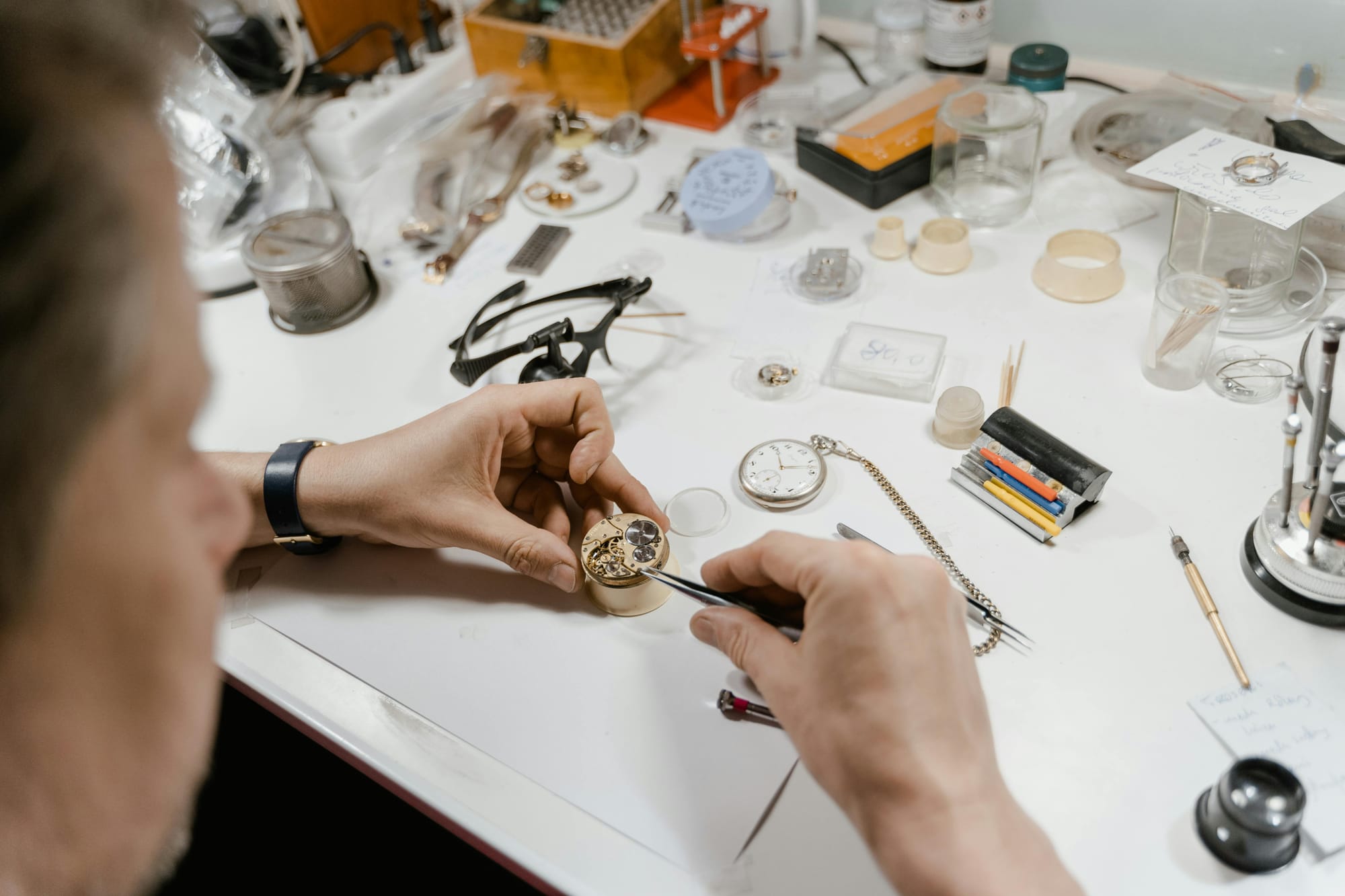
Whether you are a hobbyist who wants to swap a strap on your weekend watch or an aspiring professional watchmaker setting up your first bench, having the right tools is non-negotiable. Cheap, improvised alternatives may seem tempting, but using household tools on a fine movement is the fastest way to ruin both the watch and your confidence. This guide walks you through the essential tools every beginner should own; what they do, why they matter, and how to choose quality over gimmick.
Precision Screwdrivers
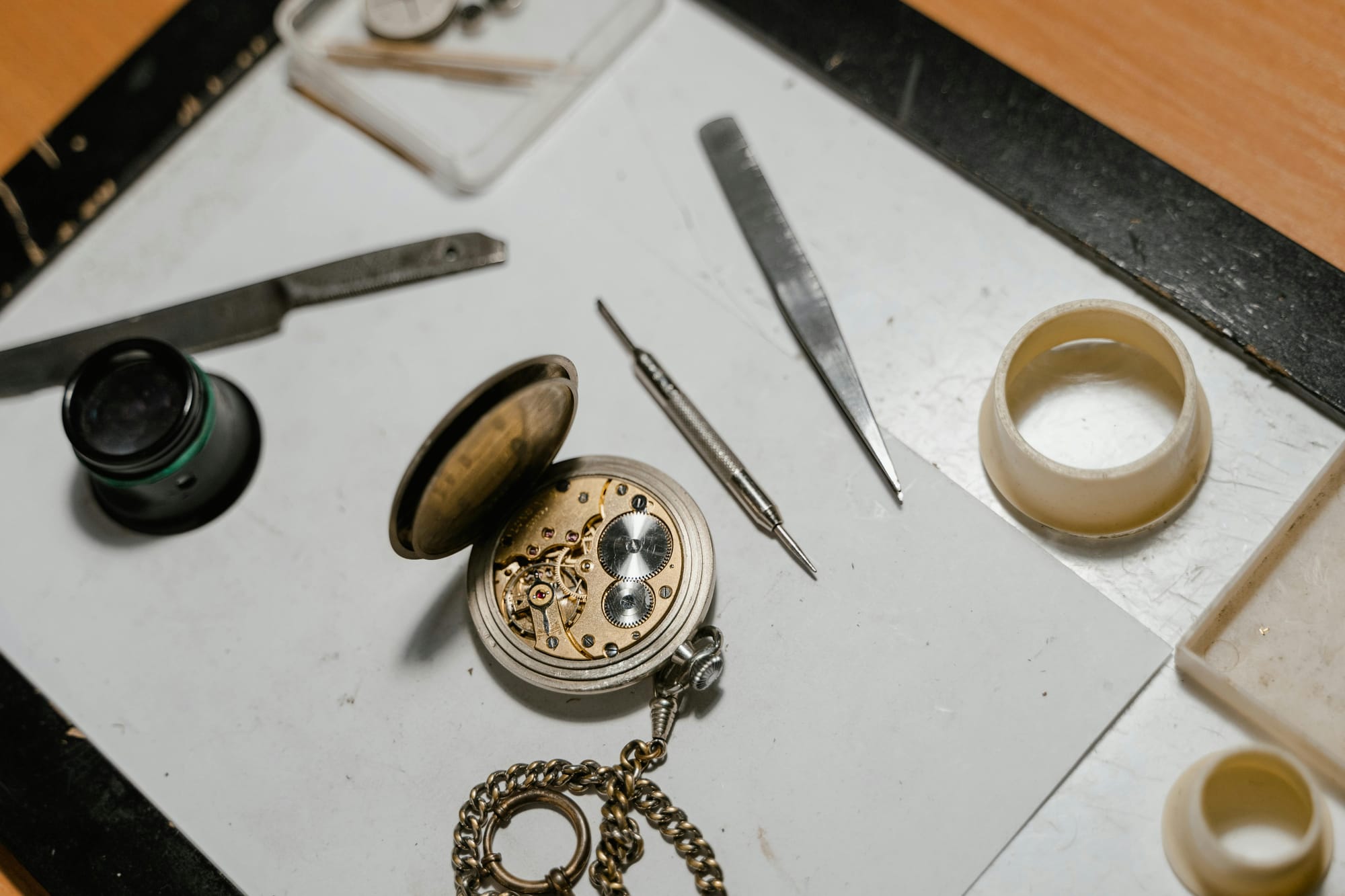
Movement screws are tiny; often less than 1mm across; and require exact-fit blade tips. A poorly fitting screwdriver will strip the screw head and potentially slip into the movement itself, damaging delicate components. Start with a set that covers 1.0mm through 2.5mm blade widths. Swiss-made brands like Bergeon and Horotec are the professional standard because their blades hold their edge far longer than budget alternatives. Many quality sets include a rotating ferrule on the handle end, giving you fine control with your fingertip while applying gentle downward pressure.
Pro tip: A properly sharpened $20 screwdriver outperforms a dull $200 one. Sharpness matters more than brand; learn to dress your blades on a fine stone early on.
Watchmaker's Tweezers
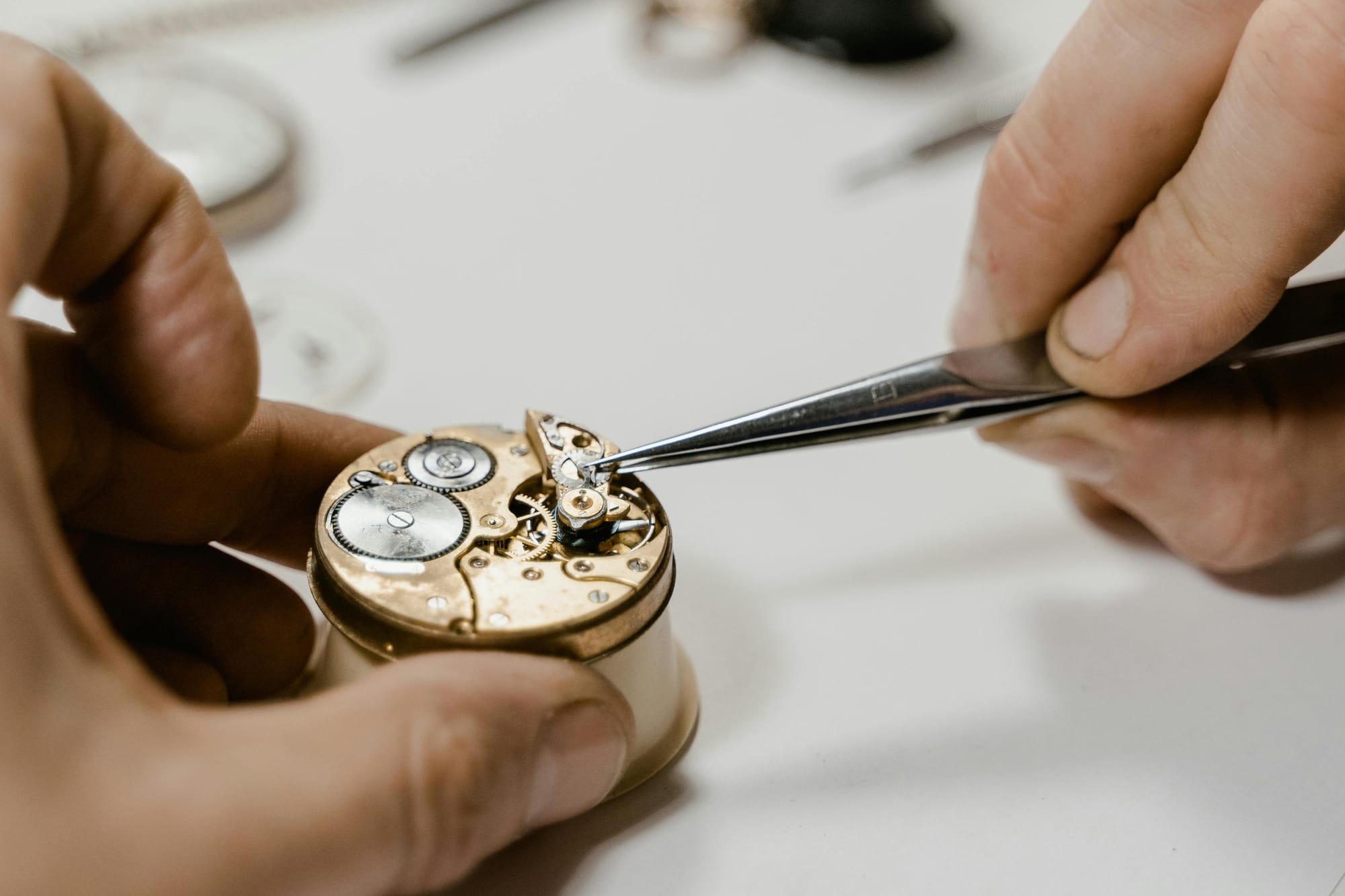
These are not cosmetic tweezers. Watchmaker's tweezers are precision instruments with carefully aligned tips designed to grip components as small as a mainspring click or a pallet jewel. The best ones are made from antimagnetic alloys (roughly 80% antimagnetic) or titanium (100% antimagnetic). Magnetized tweezers can magnetize the hairspring inside a movement, causing the watch to run fast or stop entirely. Dumont tweezers are widely considered the gold standard among professionals, with Wiha and Rubis as excellent alternatives.
You will want at least two pairs: a fine-pointed pair for placing small parts and a broader pair for handling larger components like bridges and plates. Always handle tweezers by the body, never near the tips, and store them in a protective case; even a light bump can misalign the tips and render them useless.
Loupe (Magnifying Eyepiece)
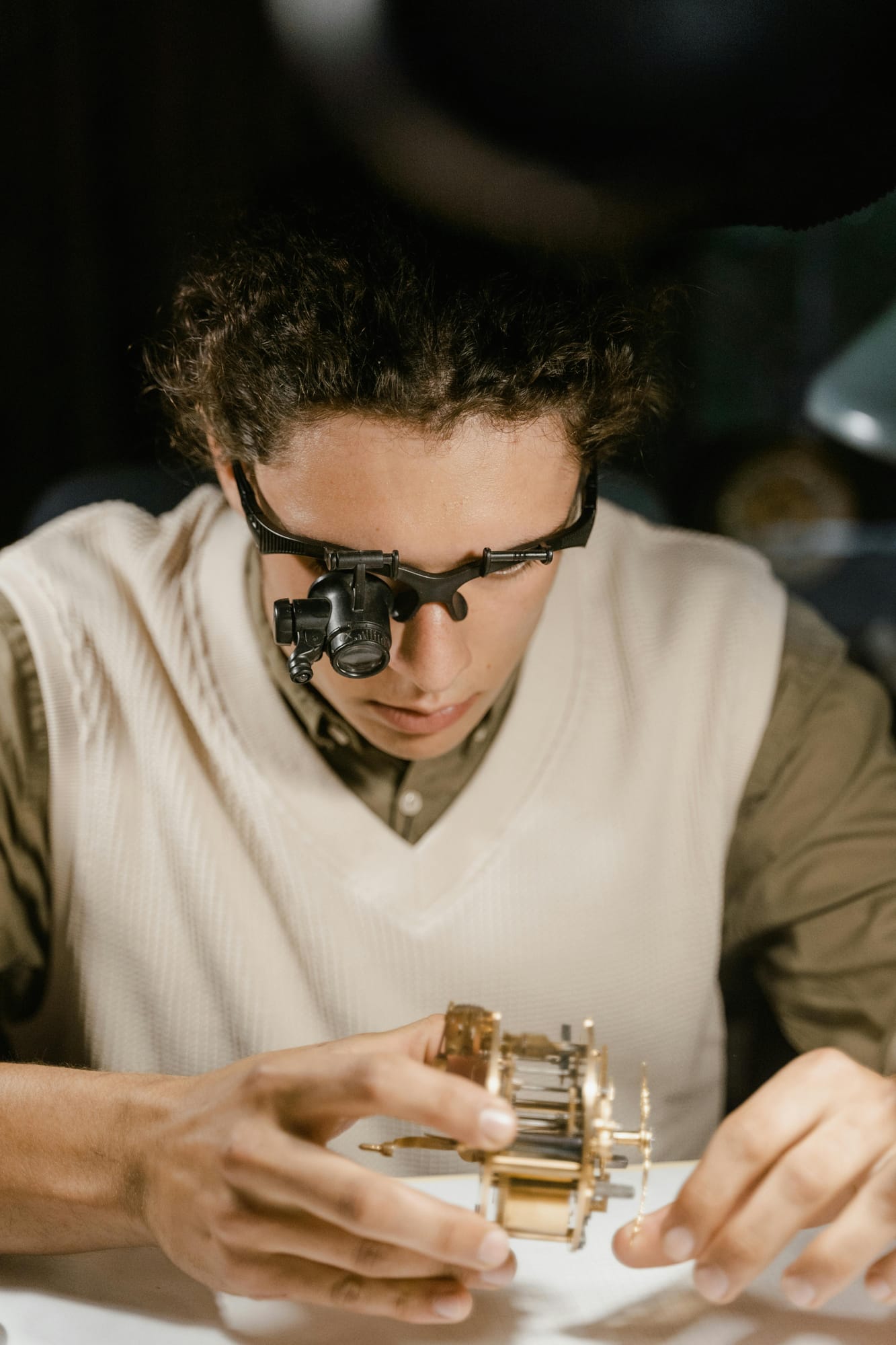
A loupe is your most-used inspection tool. For general bench work, a 3x to 4x magnification loupe clips to your glasses or headband and lets you work comfortably for extended periods. For detailed inspection of jewels, pivots, and escapement components, keep a 10x loupe nearby. The Bergeon 7913 clip-on eye loupe is a popular professional choice. Quality optics make a noticeable difference; cheap loupes distort edges and cause eye strain during long sessions.
Case Back Opener
Before you can do anything to a movement, you need to get the case open. There are different tools for different case back types (snap-off, screw-down, and screw-fixed), and using the wrong one will scratch the case, damage the gasket, or strip the threads. This is important enough that we wrote a separate guide on choosing case openers; but for your starter kit, a basic friction-style opener for snap backs and a 2-pin opener for screw-down backs will cover most watches.
Spring Bar Tool
This small forked tool compresses the spring bars that hold watch straps and bracelets to the case. You will use it constantly; for strap changes, bracelet sizing, and accessing the case back on watches where the bracelet blocks the opener. A good spring bar tool has a fine forked tip on one end and a pointed tip on the other. Keep it within arm's reach at all times. It quickly becomes one of the most-used tools on any watchmaker's bench.
Movement Holder and Cushion
A movement holder cradles the watch case while you work, preventing it from rolling or sliding. The Bergeon watch cushion is a favorite among professionals for its balance of support and softness. They come in various sizes. 55mm and 75mm are the most common. A 75mm cushion in a lighter color is recommended for beginners because it makes dropped screws and parts easier to spot against the surface. Complement this with a soft bench mat to catch anything that rolls off the cushion.
Pegwood and Rodico
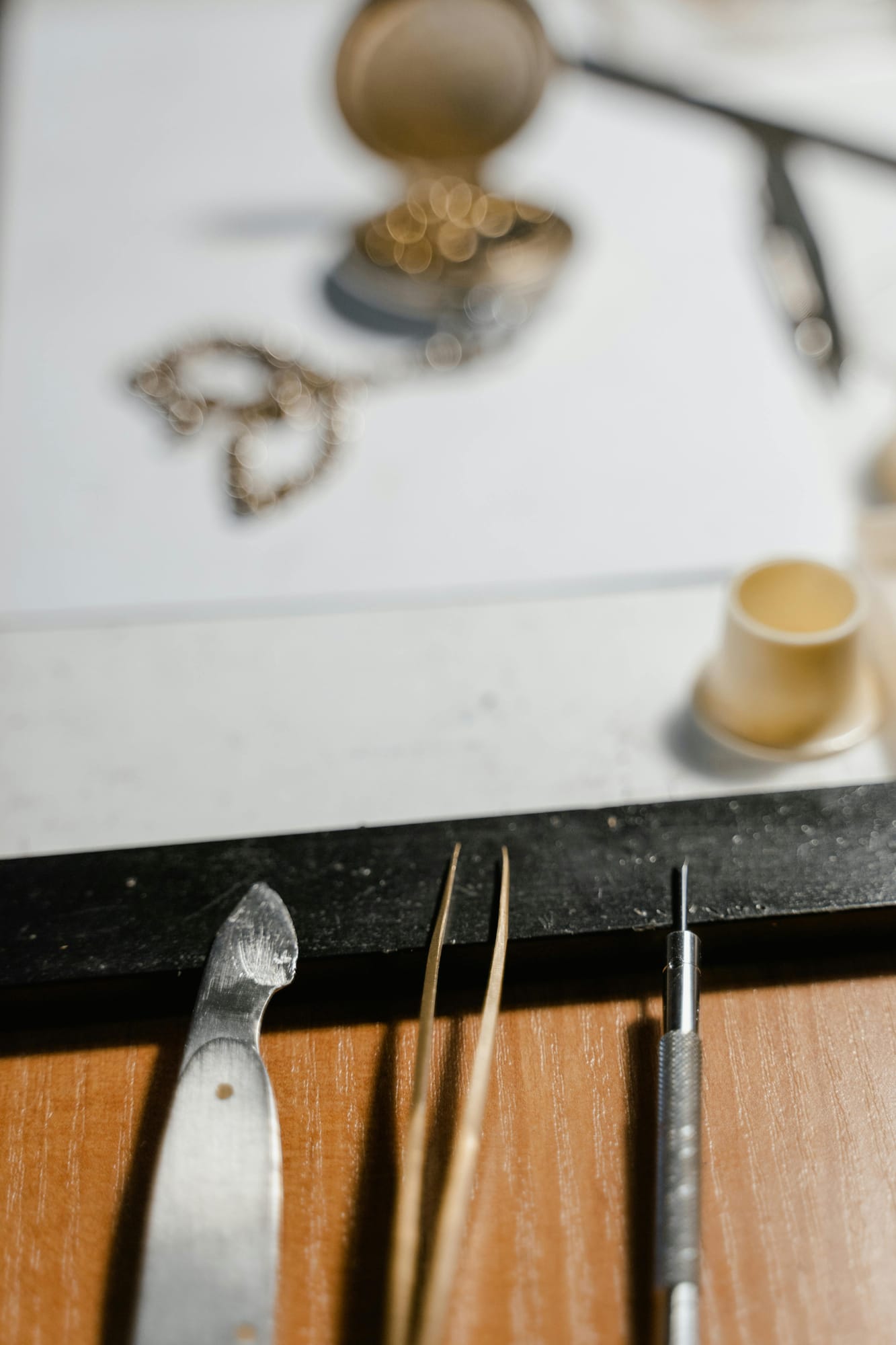
Pegwood is a hard, close-grained wooden stick that can be sharpened to a fine point or flat edge. It is used for cleaning pivot holes, removing dried oil, and gently pushing parts into position without scratching. Many experienced watchmakers call it one of the most versatile tools on the bench. Rodico is a highly absorbent putty-like cleaning compound that lifts dust, oil, and fingerprints from movement parts without leaving any residue. Together, pegwood and Rodico are often called the 'WD-40 of watchmaking'; they solve a surprising range of problems.
Demagnetizer
Magnetism is the silent enemy of mechanical watches. A magnetized hairspring causes the watch to run wildly fast, and magnetized tools can transfer that problem to every movement you touch. A simple handheld demagnetizer costs under $30 and takes seconds to use. Run your tools through it before starting any movement work, and keep it on your bench as a standard step in your workflow.
Dust Blower and Finger Cots
A rubber dust blower removes debris from movements and work surfaces without physical contact. Finger cots (or nitrile gloves) prevent skin oils from contaminating parts; human skin oil is mildly corrosive and can cause discoloration and performance issues over time. These two items cost almost nothing but prevent expensive mistakes.
Building Your Kit: Budget vs. Investment
A basic starter kit of acceptable quality runs $100 to $200. This gets you a screwdriver set, tweezers, a loupe, case openers, spring bar tool, and consumables like pegwood and Rodico. If you plan to pursue watchmaking seriously, a more comprehensive kit in the $600 to $800 range adds better screwdrivers with spare blades, multiple loupe magnifications, a quality movement holder, and a demagnetizer.
Our recommendation: Start with the best screwdrivers and tweezers your budget allows; these two tools make the biggest difference in your work quality. Upgrade everything else over time as you develop your skills.
Common Beginner Mistakes to Avoid
- Using household screwdrivers or kitchen tweezers; they lack precision and will damage components
- Over-tightening screws; most watch screws need only finger-tight pressure plus a quarter turn
- Ignoring tool maintenance; dull tips slip and cause damage; sharpen regularly
- Working without magnification; if you cannot see it clearly, you cannot work on it safely
- Skipping the demagnetizer; one magnetized tool can ruin a movement
- Touching movement parts with bare fingers; always use cots, gloves, or tweezers
The right tools, properly maintained, will serve you for years; even decades. Invest wisely at the start, take care of what you buy, and your workbench will reward you with cleaner results and fewer frustrating mistakes.
Ready to Build Your Toolkit?
Browse our curated selection of professional watchmaking tools, batteries, and accessories.
Browse Our Tools