Maintenance
Caring for Your Precision Tools
Levi Tool & Co TeamMarch 5, 20269 min read
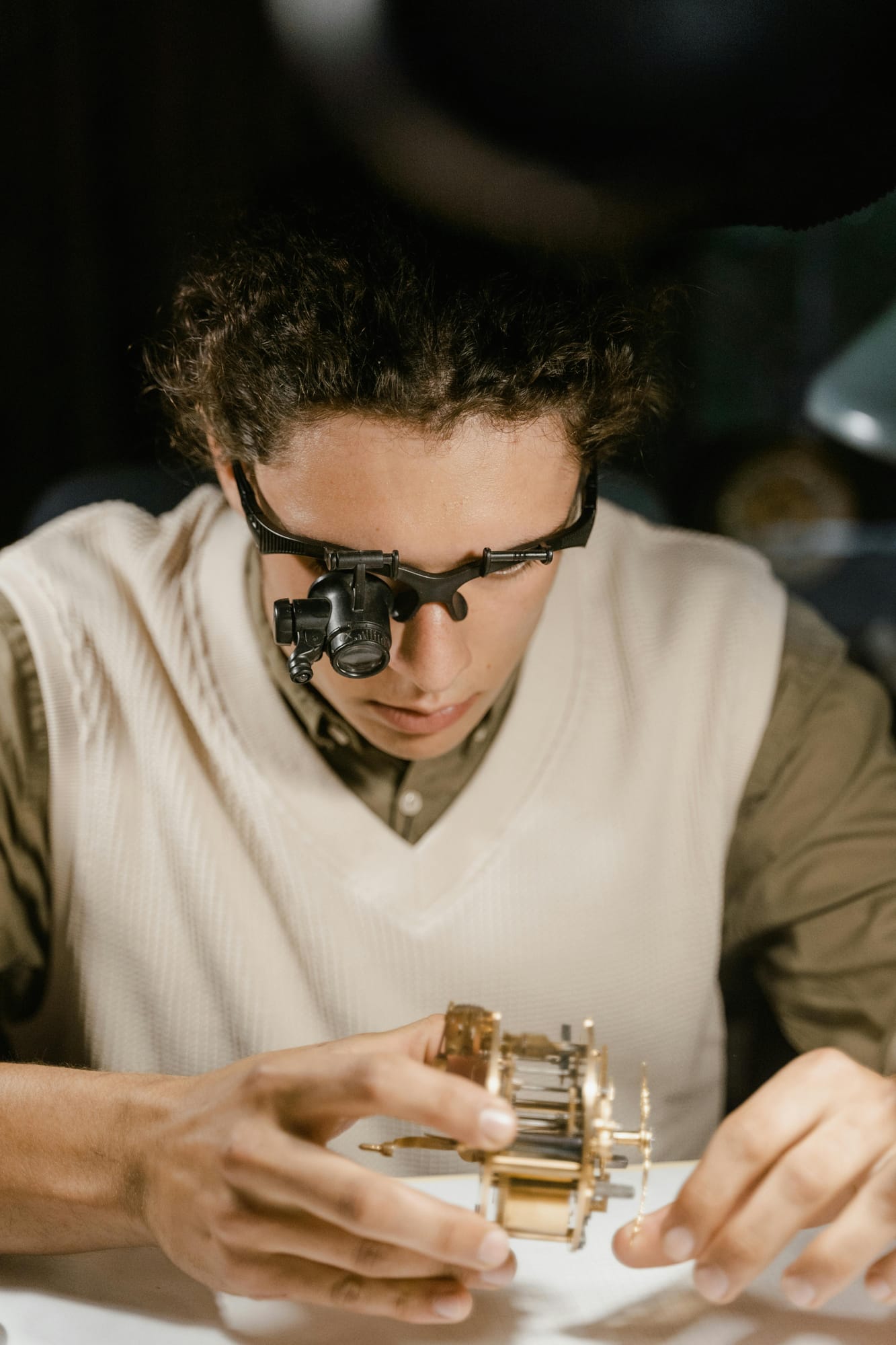
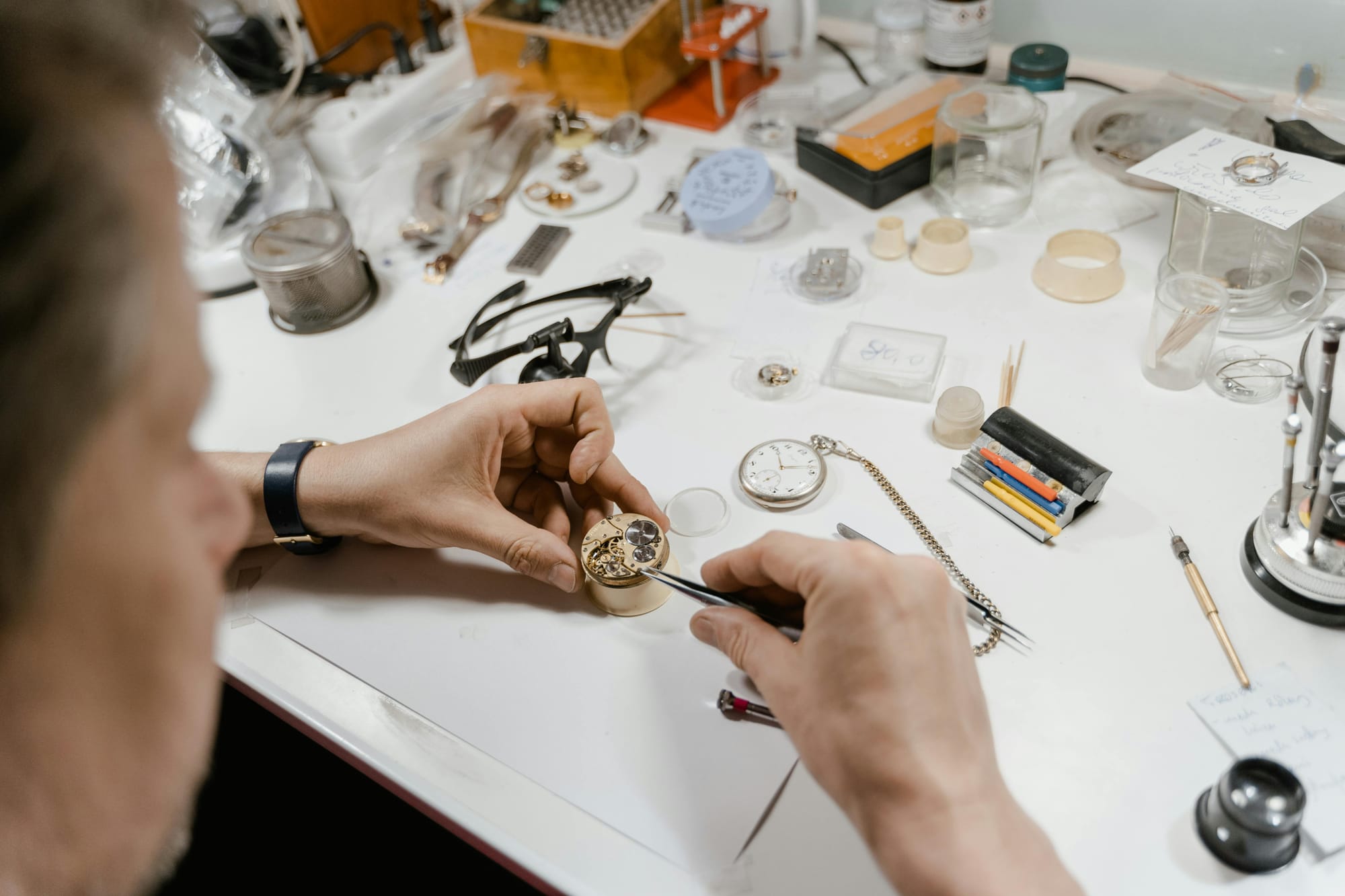
A skilled watchmaker is only as good as their tools; and a precision tool is only as good as its maintenance. Watchmaking instruments are designed to work at tolerances measured in hundredths of a millimeter. A dull screwdriver tip, a misaligned tweezer, or a smudged loupe does not just make work harder; it introduces risk. Slipping tools damage components. Contaminated tools transfer debris into movements. Neglected tools fail when you need them most. This guide covers practical, proven maintenance routines for the most common watchmaking tools.
Tweezers: Alignment, Sharpening, and Storage
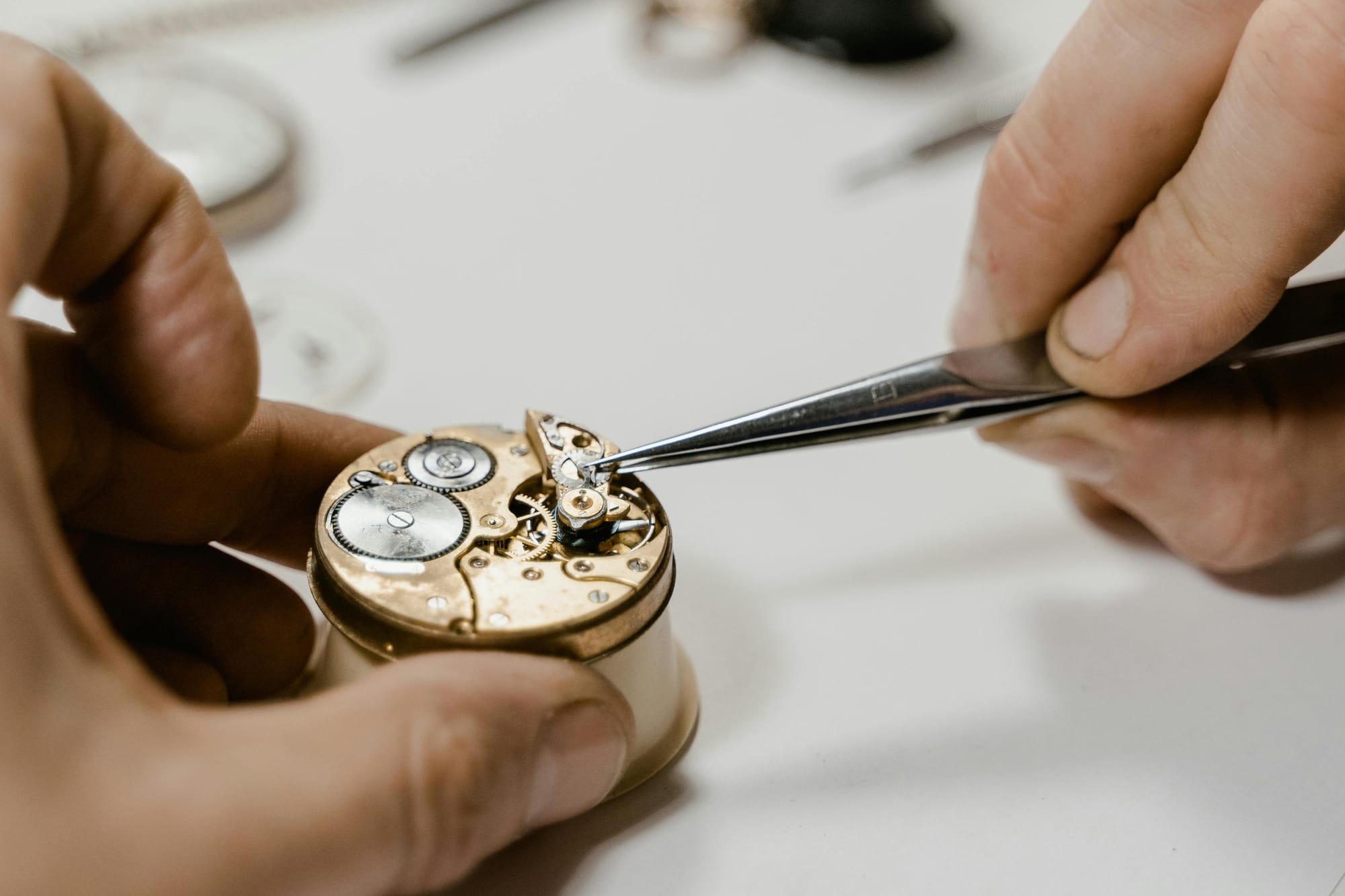
Tweezers are arguably the most sensitive tools on your bench. Their tips are ground to precise alignment; when the jaws close, the tips should meet evenly across their full width with no gap, twist, or offset. Even a slight misalignment means parts slip, requiring more grip force, which risks launching tiny components across the room. Check alignment regularly by holding the tweezers at eye level and gently closing them. The tips should mate cleanly with no visible light passing between them.
How to Sharpen Tweezers
Tweezers have five surfaces that can be dressed: the two outer edges, the top, the bottom, and the inner gripping faces. Place the tweezers slightly open on a fine sharpening stone (an Arkansas stone or ceramic stone works well). Apply light pressure on the front portion of the tip and make long, controlled strokes across the stone. After dressing the outer surfaces, lightly rub the inner faces to improve the contact surfaces. Check alignment frequently during the process; it is easy to over-sharpen one side and introduce asymmetry.
Critical rule: Use light pressure and controlled strokes. Heavy pressure removes too much material and permanently alters the tip geometry. You can always take more off; you cannot put material back on.
After sharpening, clean the tips with a lint-free cloth to remove any metal particles. Test the tweezers by picking up a thin piece of tissue paper; properly dressed tips should grip it securely without tearing. Most active watchmakers sharpen their tweezers every 2 to 4 weeks.
Tweezer Storage
Never store tweezers loose in a drawer or toolbox. The tips will contact other tools, causing dings and misalignment. Use a protective case with individual slots, a foam-lined holder, or at minimum wrap each pair in a soft cloth. Store in a dry environment; humidity causes corrosion, especially on non-stainless alloys. After each use, wipe the tweezers with a dry cloth to remove skin oils and perspiration, which are mildly corrosive to most tool metals.
Screwdrivers: Blade Dressing and Tip Maintenance
Watchmaking screwdrivers have flat-bladed tips that must fit precisely into screw slots. A blade that is too wide will scratch the plate around the screw. A blade that is too narrow or rounded will cam out of the slot and strip the screw head. Over time, even quality blades develop rounded edges from normal use, and they need to be re-dressed.
To dress a screwdriver blade, place the blade flat on a fine sharpening stone and make even, straight strokes to restore the flat face. Then dress each side to maintain parallel edges. The finished blade should have a flat tip with squared, parallel sides; no bevel, no taper, no rounding. Test the dressed blade by inserting it into a screw slot; it should drop in with minimal play and feel solid when you apply turning pressure.
Screwdriver Storage
A rotating base that holds 8 to 10 screwdrivers is the most common storage solution. Each driver sits in its own slot with the blade pointing up, protected from contact with other tools. Keep the base on your workbench within arm's reach. When traveling, use a padded roll or case with individual pockets. Never store drivers blade-down where the tip can press against a hard surface.
Loupes: Cleaning and Protection
Optical surfaces are surprisingly easy to damage. Dust particles trapped between a cloth and the lens act as abrasives, creating micro-scratches that accumulate into haze over time. Always blow loose dust off with a rubber dust blower before wiping. Then use a clean, dedicated lens cloth (not a general-purpose shop rag) with a lens-specific cleaning solution. Wipe in gentle circles from the center outward. Never use window cleaner, alcohol, or paper towels; they can strip coatings and leave fibers.
Store loupes in their protective case when not in use. If your loupe is a clip-on style, keep it clipped to a dedicated holder rather than tossing it in a drawer. Avoid leaving loupes in direct sunlight. UV exposure degrades anti-reflection coatings over time. Handle by the frame only, never by the lens.
Case Openers: Edge Maintenance
Case knives (for snap backs) must maintain a thin, smooth edge to slip cleanly between the case and case back. If the edge develops nicks or burrs, it will scratch the case during opening. Inspect the blade edge under magnification periodically and smooth any burrs with a fine stone. Pin-style openers (2-pin and JAXA wrenches) should have their pins checked for wear; rounded or flattened pins slip out of case back notches under pressure. Many quality wrenches have replaceable pins for this reason.
After each use, wipe case openers clean and dry. If you opened a watch with old gasket grease, that grease can transfer to the tool and then onto the next watch. A quick wipe with a clean cloth prevents cross-contamination.
General Maintenance Habits
- Clean every tool after every session; a 5-minute cleanup prevents buildup that degrades precision over time
- Apply a thin film of light machine oil to metal tools periodically; it prevents corrosion without leaving heavy residue
- Use gloves or finger cots when handling precision surfaces; skin oils are mildly corrosive and transfer easily
- Keep your workspace clean; dust on the bench means dust on your tools and in the movements you work on
- Maintain a consistent storage system; every tool has a home, and it goes back after every use. This prevents accidental damage from loose storage and makes missing tools immediately obvious.
- Run tools through a demagnetizer periodically; magnetized screwdrivers and tweezers can magnetize movement parts
The Eight Most Common Tool Care Mistakes
- Not cleaning after use; oils, adhesives, and debris accumulate and degrade tool performance
- Storing tools loose or jumbled; tips get dinged, misaligned, and dulled from contact with other tools
- Over-sharpening; removing too much material destroys tool geometry permanently
- Using the wrong tool for the job; using tweezers as a screwdriver or a screwdriver as a pry tool causes irreversible damage
- Ignoring humidity; storing metal tools in damp environments causes rust and pitting
- Skipping alignment checks; working with misaligned tweezers wastes time and risks damaging components
- Touching precision surfaces with bare skin; fingerprints corrode metal and contaminate optical coatings
- Dropping tools and continuing to use them; even a short fall onto a hard surface can misalign tips or crack lens coatings. Always inspect after a drop.
When to Replace vs. Repair
Most quality watchmaking tools can be maintained and re-dressed almost indefinitely. Screwdriver blades can be resharpened dozens of times before they become too short to use. Tweezers can be realigned and re-dressed for years. However, there are limits. If tweezer tips have been bent past their elastic limit, no amount of dressing will fix the alignment. If a screwdriver blade is chipped or cracked, replace the blade (or the driver). If a loupe lens is scratched beyond what cleaning can fix, replace the lens element or the entire loupe.
The economics of tool care are simple: a $60 pair of Dumont tweezers maintained properly will last a decade. The same tweezers neglected will need replacement in a year. Five minutes of maintenance after each session pays for itself many times over.
Your tools are an investment in your craft. The few minutes you spend cleaning, inspecting, and storing them properly after each session protects that investment and ensures that every watch you work on gets the precision it deserves. Build the habit early, and it will serve you; and your tools; for a very long time.
Ready to Build Your Toolkit?
Browse our curated selection of professional watchmaking tools, batteries, and accessories.
Browse Our Tools